
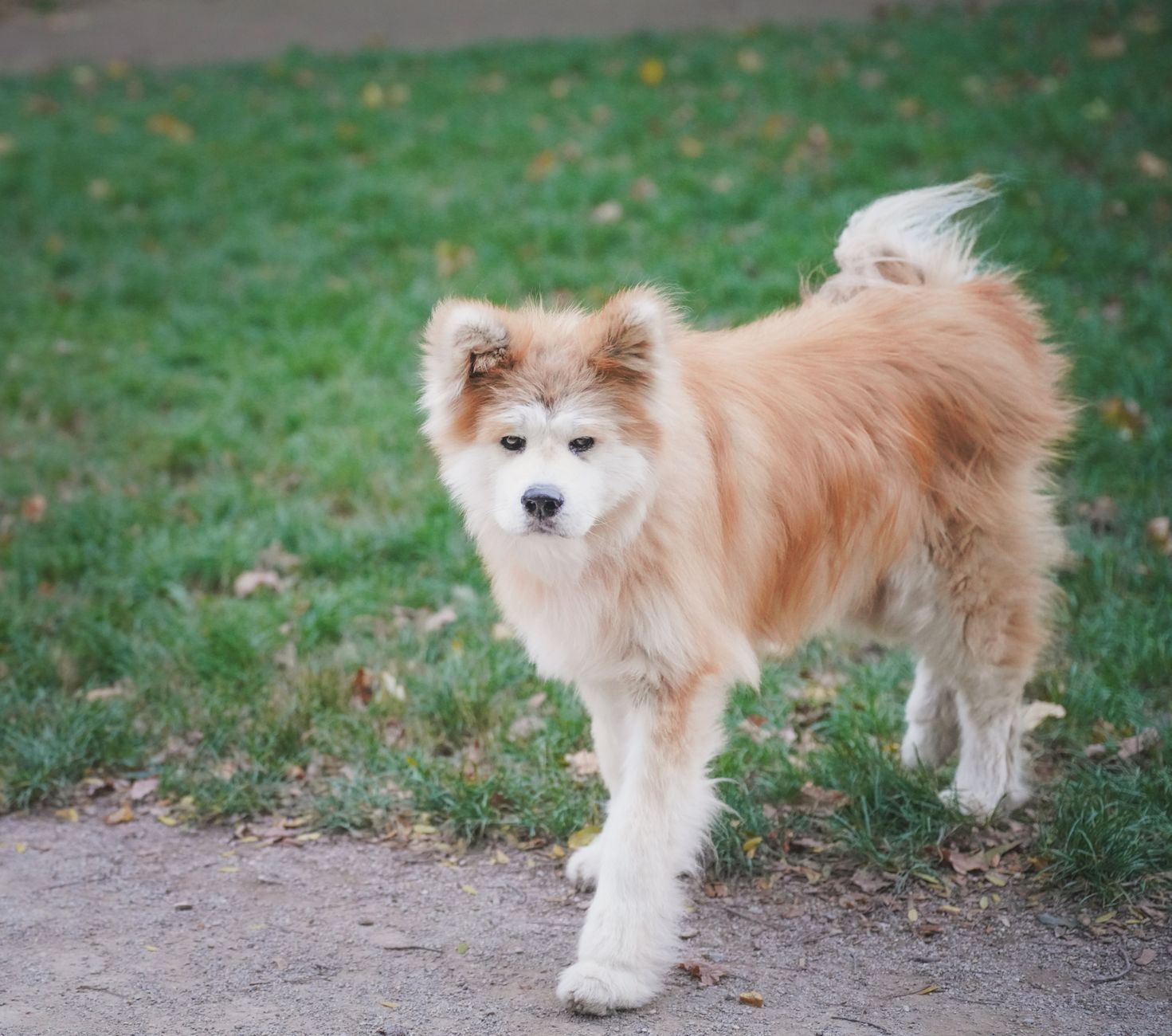
What to Know Before Buying an Akita Puppy
Quick answer: The Akita is a powerful, dignified Japanese guardian breed, 70 to 130 pounds of loyalty, independence, and strong opinions about strangers and other dogs. Expect roughly $1,500 to $3,000 from a health-tested breeder, plan for heavy seasonal shedding and firm, early training, and verify OFA hip, eye, and thyroid results on both parents before you commit.
At a Glance
| Breed group | Working (AKC recognized 1972)[2] |
| Height | Males 26 to 28 inches; females 24 to 26 inches |
| Weight | Males 100 to 130 pounds; females 70 to 100 pounds |
| Life expectancy | 10 to 13 years |
| Coat | Thick double coat; sheds year-round with heavy seasonal blows twice a year |
| Typical puppy price | $1,500 to $3,000 from a health-tested breeder; show lines can run higher |
| Health tests to verify | OFA hip evaluation, eye exam (CAER), and thyroid panel; ask about autoimmune history in the line[4] |
| Best for | Experienced owners who want a devoted, quiet, protective companion and can manage a strong-willed guardian breed |
1. Legendary loyalty comes with a guardian’s edge
The Akita’s devotion is the stuff of actual legend: Hachiko, the Akita who waited at a Tokyo train station for his late owner every day for nearly ten years, has a statue at Shibuya Station. That loyalty is real, and with their own families Akitas are affectionate, quietly funny, and almost cat-like in their cleanliness and composure. This is a breed that bonds profoundly and guards instinctively.
The other side of the coin: Akitas were bred in northern Japan to guard and to hunt large game, and they remain aloof with strangers, frequently intolerant of other dogs, especially of the same sex, and strong-willed about who is actually in charge. They are not dog-park dogs, and they read body language keenly enough to act on perceived threats before you notice one. Early socialization, consistent training, and an owner comfortable with calm leadership are requirements, not suggestions.
2. Finding a well-bred puppy
The gap between a well-bred Akita and a poorly bred one is wider than in most breeds, because temperament stability in a 100 pound guardian is a safety issue, not a preference. Backyard-bred Akitas with sharp or unstable temperaments are a known problem, so this is a breed where the breeder matters as much as the breed.
Start with the Akita Club of America, the AKC parent club, which maintains breeder referral resources and a code of ethics.[1] A good breeder will talk frankly about the temperament of their lines, will ask about your experience with strong-willed breeds, will show health testing documentation without being asked twice, and will take the dog back at any point in its life. Expect a waitlist of several months for well-bred litters.
3. Health testing to verify before you buy
The core screening list for Akitas covers hip dysplasia, eye disease including progressive retinal atrophy, and thyroid function,[4] so verify OFA hip, CAER eye,[5] and thyroid results on both parents on the OFA website yourself.[3] Beyond the testable conditions, the breed carries a known predisposition to autoimmune disorders, including sebaceous adenitis, uveodermatologic (VKH-like) syndrome, and pemphigus, so ask breeders directly about autoimmune history in their lines.
Two practical notes for your vet file: as a deep-chested breed, Akitas carry real bloat (gastric dilatation-volvulus) risk, so learn the emergency signs,[6] and many Akitas have a harmless red blood cell trait that can falsely elevate potassium readings on lab work, which is worth flagging to any vet who does not know the breed.
4. The coat blows out twice a year
The Akita’s plush double coat is low-maintenance most of the year: weekly brushing, no trimming, no professional styling, and a notably clean, nearly odor-free dog. Then twice a year the undercoat lets go all at once, and for several weeks you will be brushing daily and finding fur in rooms the dog has never entered. A good undercoat rake and tolerance for hair on your clothes are part of the deal, and the coat should never be shaved.
If low shedding is a requirement, this is not your breed. Long-coated Akitas also appear in some litters, a recessive coat that is charming but not showable, and often available at a modest discount from good breeders.
5. Is an Akita right for your household?
For the right owner, an Akita is a once-in-a-lifetime dog: quiet, clean, devoted, and naturally protective without needing to be taught. The honest cautions: this is a poor first dog, multi-dog households require careful matching and management, high prey drive makes cats and small pets risky, and children’s friends running and shrieking through the house can be misread by a guardian breed, so active supervision is non-negotiable. Check your homeowner’s insurance and local ordinances too, since Akitas appear on some breed restriction lists.
Plan on puppy socialization that starts immediately and never really ends, a securely fenced yard, and accepting that a breed developed to hunt bear and guard nobility will never be a reliable off-leash dog in unfenced areas.
Frequently Asked Questions
How much does an Akita puppy cost?
Expect roughly $1,500 to $3,000 from a reputable, health-testing breeder in the United States, with show-prospect puppies and imported Japanese lines costing more. Waitlists of several months are common. Bargain-priced Akitas from untested parents are a genuine risk in this breed, where temperament stability matters for safety.
Are Akitas good family dogs?
With their own families, yes: Akitas are devoted, gentle with the children they are raised with, and naturally protective. The cautions are real, though. They need active supervision around visiting children, careful management around other dogs, and an experienced owner. They are not a good choice for first-time dog owners.
Do Akitas shed?
Yes, heavily in season. The thick double coat sheds moderately year-round and blows out dramatically twice a year, when daily brushing with an undercoat rake becomes necessary for several weeks. Outside coat-blow season, weekly brushing is enough, and the breed is famously clean and nearly odor-free.
What is the difference between an American Akita and a Japanese Akita Inu?
They share ancestry but have diverged into distinct types. The American Akita is larger and heavier-boned, comes in all colors including the black mask, and is the type the AKC registers simply as Akita. The Japanese Akita Inu is lighter, more fox-like in expression, and limited to red, white, and brindle. Most other countries register them as separate breeds.[2]
Read the official AKC breed standard
Sources
- Akita Club of America (AKC parent club: breeder referral, code of ethics, breed education)
- American Kennel Club: Akita Breed Information
- Orthopedic Foundation for Animals (OFA)
- Canine Health Information Center (CHIC): Breed Testing Requirements
- OFA: Companion Animal Eye Registry (CAER) Eye Certification
- American College of Veterinary Surgeons: Gastric Dilatation-Volvulus (Bloat)
- AKC Marketplace