
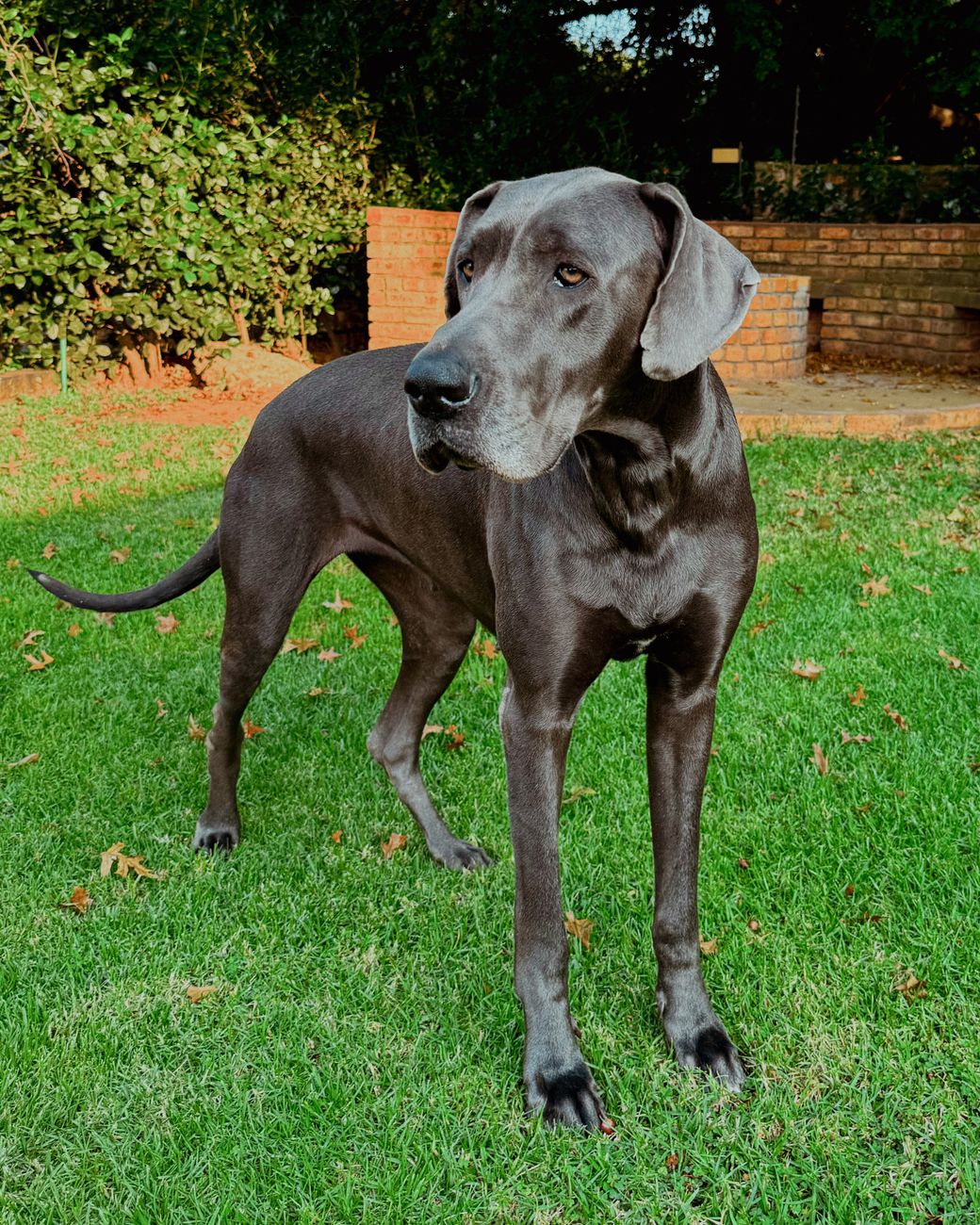
What to Know Before Buying a Great Dane Puppy
| Group | Working (AKC, recognized 1887) |
|---|---|
| Origin | Germany |
| Height | 28–32+ inches |
| Weight | Females 110–140 lbs, males 140–175 lbs |
| Lifespan | 7–10 years |
| Coat | Short, smooth, sleek; low-maintenance, moderate shedding |
| Color | Fawn, brindle, blue, black, harlequin, mantle, and merle |
| Temperament | Gentle, affectionate, patient, friendly, dependable |
| Good for | Owners with space and budget prepared for a giant’s needs and short life |
1. A Gentle Giant, With Giant Trade-offs
Great Danes are one of the tallest breeds on earth and among the sweetest, calm, affectionate, patient, and famously good with children (though at 100–175 pounds they can bowl over a toddler without meaning to). They’re lower-energy than their size suggests and want to be near their people. But loving a Dane means accepting hard realities: the lifespan is just 7–10 years, one of the shortest of any breed, and everything costs more, food, medication, surgery, boarding, bedding.
2. Bloat Is the Headline Health Risk
The deep-chested Great Dane has the highest risk of bloat (gastric dilatation-volvulus) of any breed, a sudden, life-threatening emergency where the stomach twists. Most experienced Dane owners and giant-breed vets recommend a preventive gastropexy (stomach tacking), often done at spay/neuter. Feed smaller meals, avoid exercise around mealtimes, and learn the signs. The breed is also prone to dilated cardiomyopathy (DCM) and other heart disease, plus bone cancer, hip dysplasia, and hypothyroidism.
3. Training, Exercise, and Space
Danes need only moderate exercise (30–60 minutes daily) but a lot of space, both a big home and a big vehicle. Crucially, avoid high-impact exercise while they’re growing to protect developing joints. Training and socialization must start in puppyhood, it’s far easier to teach manners to a small puppy than to manage an untrained 150-pound adult. They’re sensitive dogs who dislike household tension.
4. Grooming and Feeding
The short coat is easy, weekly brushing. Feeding is the real task: large-breed puppy food to slow growth (until about 18 months), multiple smaller meals to reduce bloat risk, raised bowls, and a healthy weight to spare the joints and heart. Provide soft bedding to prevent calluses.
5. Finding a Responsible Breeder
Start with the Great Dane Club of America and verify any breeder against the AKC Marketplace. Favor breeders who health-test hearts and prioritize temperament and longevity, and be aware merle and “designer” color breeding can carry added risks.
Frequently asked questions
How long do Great Danes live?
Just 7 to 10 years, among the shortest of any breed, largely due to their giant size, bloat risk, heart disease, and bone cancer. Preventive care and a health-focused breeder help you reach the upper end.
Are Great Danes good family dogs?
Yes. They’re gentle, affectionate, and patient and typically great with children, but their enormous size means supervision around small kids, plus you’ll need space and a real budget for a giant dog.
Why do Great Danes need a gastropexy?
They have the highest bloat (GDV) risk of any breed, a deadly stomach-twisting emergency. A preventive gastropexy tacks the stomach so it can’t twist, and most giant-breed vets strongly recommend it, often at spay/neuter.
How much does a Great Dane puppy cost?
Prices vary by breeder and region, so confirm current figures directly with Great Dane Club of America breeders. Remember the ongoing costs, food, meds, and vet care for a giant dog are substantial.