
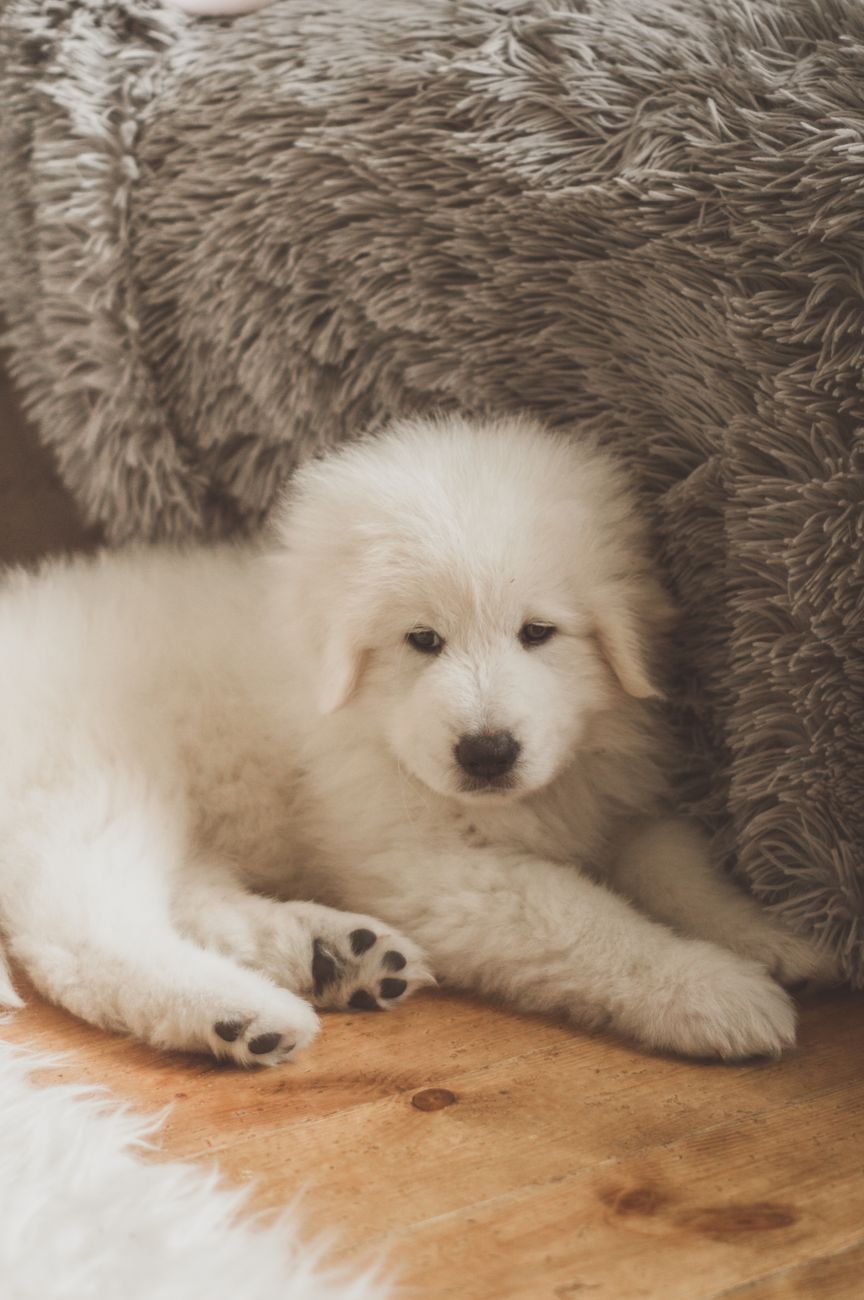
What to Know Before Buying a Great Pyrenees Puppy
| Group | Working (AKC, recognized 1933) |
|---|---|
| Origin | Pyrenees Mountains (France/Spain) |
| Height | Males 27–32 in, females 25–29 in |
| Weight | Females 85+ lbs, males 100+ lbs |
| Lifespan | 10–12 years |
| Coat | Thick white weatherproof double coat; sheds heavily |
| Color | White, or white with markings of gray, tan, or badger |
| Temperament | Calm, gentle, patient, independent, watchful, protective |
| Good for | Owners with space and fencing who understand guardian-breed independence |
1. A Livestock Guardian at Heart
The Great Pyrenees spent a thousand years alone in the mountains guarding sheep from bears and wolves, and that job shaped everything about the breed. It’s calm, patient, and deeply devoted, gentle and protective with its family (especially children and smaller animals), but it’s also an independent thinker bred to make its own decisions, which reads as stubbornness in a pet home. This is not a breed that lives to obey; it lives to watch and protect.
2. Barking, Roaming, and Fencing
Two guardian traits you must plan for. First, barking: Pyrs are naturally nocturnal and bark, a lot, especially at night, to warn off perceived threats. That’s non-negotiable breed behavior, manageable but not eliminable, and a real issue for close neighbors. Second, roaming: they have a strong wandering instinct and are escape artists, so secure, tall fencing and leashed walks are essential, off-leash freedom is not safe.
3. Calm Energy, Independent Training
Pyrs aren’t high-energy, they conserve themselves for guard duty, so moderate exercise (walks, space to patrol) suffices, but they need room and are poorly suited to apartments. Training requires patience: start young, keep it positive, and accept that a guardian breed’s recall and obedience will never be as crisp as a Border Collie’s. Early, thorough socialization keeps the protective instinct balanced. They must live with their family, not be chained or isolated.
4. Grooming and Health
The thick white double coat sheds heavily and needs regular brushing (more during seasonal blows), plus attention to the double dewclaws on the rear legs. The breed is fairly long-lived for its size; screens include hip and elbow dysplasia, eye conditions, patellar luxation, heart issues, and, as a large deep-chested dog, bloat (GDV).
5. Finding a Responsible Breeder
Start with the Great Pyrenees Club of America and verify any breeder against the AKC Marketplace. Pyrs and Pyr mixes also turn up often in rescue. A good breeder is honest about the barking, shedding, and independence.
Frequently asked questions
Do Great Pyrenees bark a lot?
Yes, a lot, especially at night. Nocturnal guardian barking is bred-in behavior, manageable with training but never fully eliminated, and a genuine consideration if you have close neighbors.
Are Great Pyrenees good family dogs?
Yes. They’re calm, gentle, and patient and famously good with children and smaller animals, but their size, independence, shedding, and barking mean they suit homes with space and realistic expectations.
How much does a Great Pyrenees puppy cost?
Prices vary by breeder and region, so confirm current figures directly with Great Pyrenees Club of America breeders. Pyrs are also very commonly available through breed rescues.
Can Great Pyrenees live in an apartment?
It’s a poor fit. They need space and secure fencing, shed heavily, and bark, and their roaming instinct and size make apartment life difficult for both dog and neighbors.