
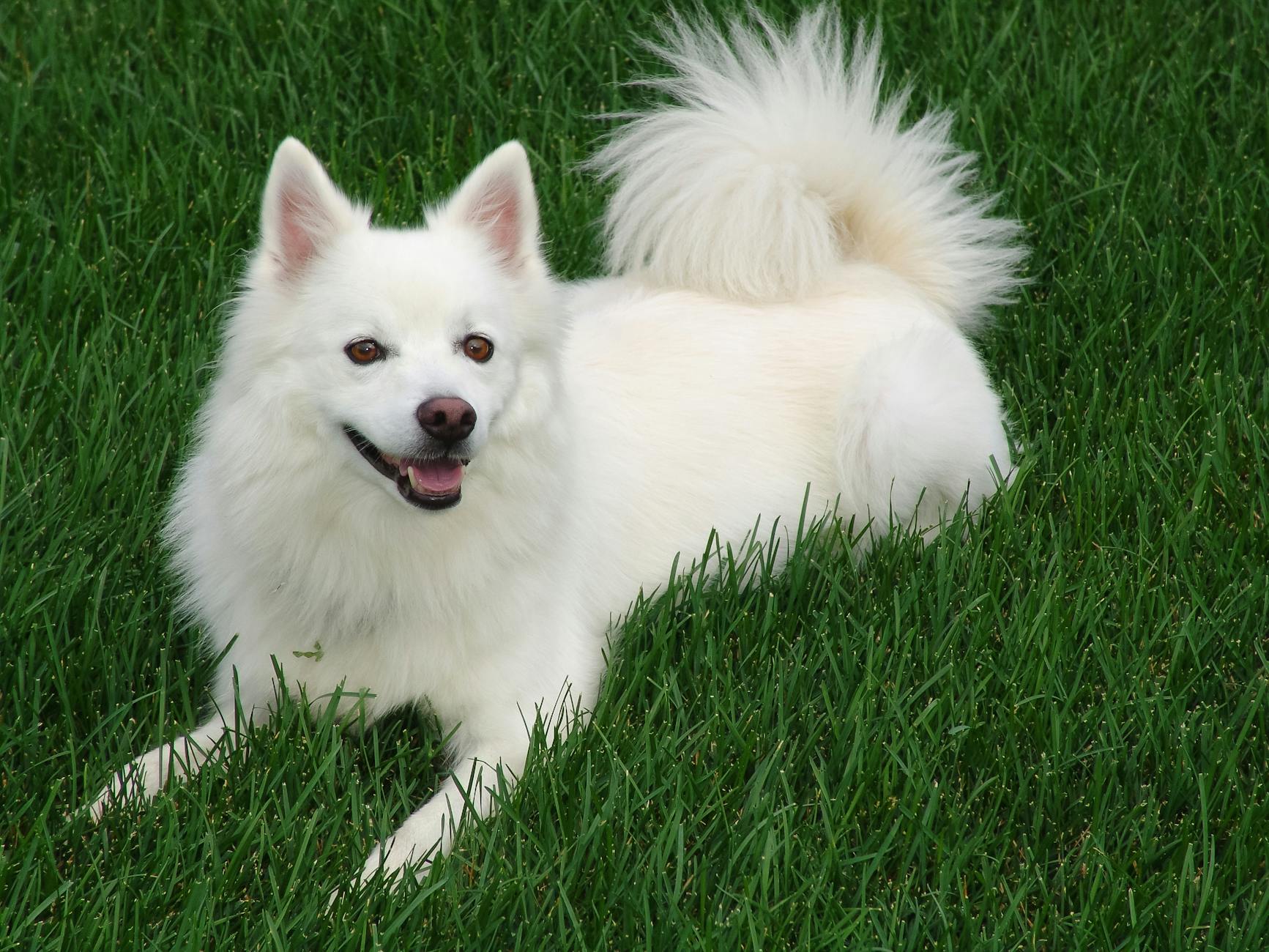
What to Know Before Buying an American Eskimo Dog Puppy
Quick answer: The American Eskimo Dog is a brilliant white spitz that comes in three sizes, lives 13 to 15 years, and pairs circus-dog cleverness with a serious voice and serious shedding. Expect roughly $1,000 to $2,000 from a health-tested breeder, plan for regular brushing and real mental stimulation, and verify OFA hip, patella, and eye results plus PRA DNA status on both parents before you commit.
At a Glance
| Breed group | Non-Sporting (AKC recognized 1994)[2] |
| Height | Three sizes: toy (9 to 12 inches), miniature (over 12 to 15 inches), standard (over 15 to 19 inches) |
| Weight | Roughly 6 to 35 pounds depending on size variety |
| Life expectancy | 13 to 15 years |
| Coat | White (or white with biscuit cream) double coat with a lion-like ruff; sheds heavily |
| Typical puppy price | $1,000 to $2,000 from a health-tested breeder; show lines can run higher |
| Health tests to verify | OFA hip, patella, and eye (CAER) evaluations, plus the prcd-PRA DNA test[4] |
| Best for | Households that want a clever, devoted, trainable companion and can live with barking and fur |
1. Circus-dog smarts with a watchdog’s voice
Despite the name, the Eskie has nothing to do with the Arctic: it descends from German Spitz dogs brought by immigrants, renamed during World War I, and made famous in American traveling circuses, where Eskies walked tightropes and performed tricks for crowds.[1] That performing heritage is the personality in a nutshell: this is one of the quickest studies in dogdom, a dog that learns tricks for the joy of the audience, reads its family constantly, and wilts without mental work.
The other inheritance is the spitz alarm system. Eskies are enthusiastic, persistent watchdog barkers, announcing deliveries, squirrels, and opinions, and managing the barking with training from puppyhood is the difference between a charming companion and a neighborhood grievance. They bond hard to their people, tend toward velcro-dog attachment, and can develop separation anxiety in homes that leave them alone and unemployed for long days.
2. Finding a well-bred puppy in three sizes
The three size varieties, toy, miniature, and standard, are one breed with one standard, so temperament and coat are consistent while the frame scales to your household. Toys are more fragile around small children; standards are sturdy little athletes. Be clear-eyed about sellers using “rare” size or color marketing, since the breed comes in white or white with biscuit cream, and anything else being sold as a rare Eskie is either mismarked or not an Eskie.
Start with the American Eskimo Dog Club of America, the AKC parent club, which maintains breeder referral resources and a code of ethics.[1] A good breeder will show health testing documentation without being asked twice, will match puppy temperaments to homes, and will take the dog back at any point in its life.
3. Health testing to verify before you buy
The Eskie is a generally healthy, long-lived breed, and the screening list covers hip dysplasia, luxating patellas, and inherited eye disease, most importantly progressive retinal atrophy of the prcd type, which has a DNA test that lets breeders avoid producing affected puppies.[4] Verify OFA hip, patella, and CAER eye results[5] on both parents yourself on the OFA website,[3] and ask for the litter’s PRA status: clear, carrier, or affected.
Size-specific notes: the toy and miniature varieties carry the usual small-dog extras, Legg-Calve-Perthes disease and dental crowding that makes tooth care a lifelong routine, while all sizes do best kept lean, since a long-lived breed pays compounding interest on extra weight.
4. The white coat is easier than it looks, except the shedding
New buyers assume a white dog means constant bathing, and the opposite is true: the Eskie’s double coat carries natural oils that shed dirt as it dries, so the breed stays remarkably white with just brushing two to three times a week and occasional baths. No trimming, no professional styling, and the coat should never be shaved.
What you cannot avoid is fur. Eskies shed year-round and blow their undercoat seasonally, and the fine white hair finds dark clothing with precision. If low shedding is a requirement, this is not your breed, and no honest breeder will call an Eskie hypoallergenic.
5. Is an Eskie right for your household?
For families, singles, and seniors who want an engaged, trainable, devoted companion, the Eskie is one of the best-kept secrets in the Non-Sporting Group, and the size range means there is an Eskie for apartments and farmhouses alike. The honest cautions: the barking is real and needs training rather than hope, the intelligence demands daily mental work or it invents projects, toys are too fragile for rough toddler handling, and a velcro breed suits homes where someone is around more often than not.
Plan on trick training and puzzle work as a daily habit rather than a treat, bark management from week one, and a brushing routine you actually keep, and the Eskie will spend fifteen years making you look like a talented dog trainer.
Frequently Asked Questions
How much does an American Eskimo Dog puppy cost?
Expect roughly $1,000 to $2,000 from a reputable, health-testing breeder in the United States, with show-prospect puppies costing more. All three sizes generally fall in the same range. Bargain pricing from untested parents, or premium pricing justified by “rare” sizes or colors, are both red flags.
Are American Eskimo Dogs good family dogs?
Yes, for engaged families. Eskies are playful, devoted, and quick to learn anything a child wants to teach them. The cautions are the toy variety’s fragility around small children, the breed’s watchdog barking, and its dislike of being left alone for long days, which makes it best for homes with regular company.
Do American Eskimo Dogs shed? Are they hypoallergenic?
They shed heavily. The white double coat drops fur year-round and blows out seasonally, and no, the breed is not hypoallergenic. The consolation is that the coat is otherwise low-effort: it sheds dirt naturally, stays white with routine brushing, and needs no trimming or professional styling.
What is the difference between an American Eskimo Dog and a Samoyed?
Size and origin. The Samoyed is a 35 to 65 pound Siberian sledding and herding breed with the famous upturned “Sammy smile,” while the American Eskimo Dog is a smaller German Spitz descendant, 6 to 35 pounds across its three varieties, bred as a farm watchdog and performer. Eskies are also typically more vocal watchdogs than Samoyeds.
Read the official AKC breed standard
Sources
- American Eskimo Dog Club of America (AKC parent club: breeder referral, code of ethics, breed education)
- American Kennel Club: American Eskimo Dog Breed Information
- Orthopedic Foundation for Animals (OFA)
- Canine Health Information Center (CHIC): Breed Testing Requirements
- OFA: Companion Animal Eye Registry (CAER) Eye Certification
- AKC Marketplace