
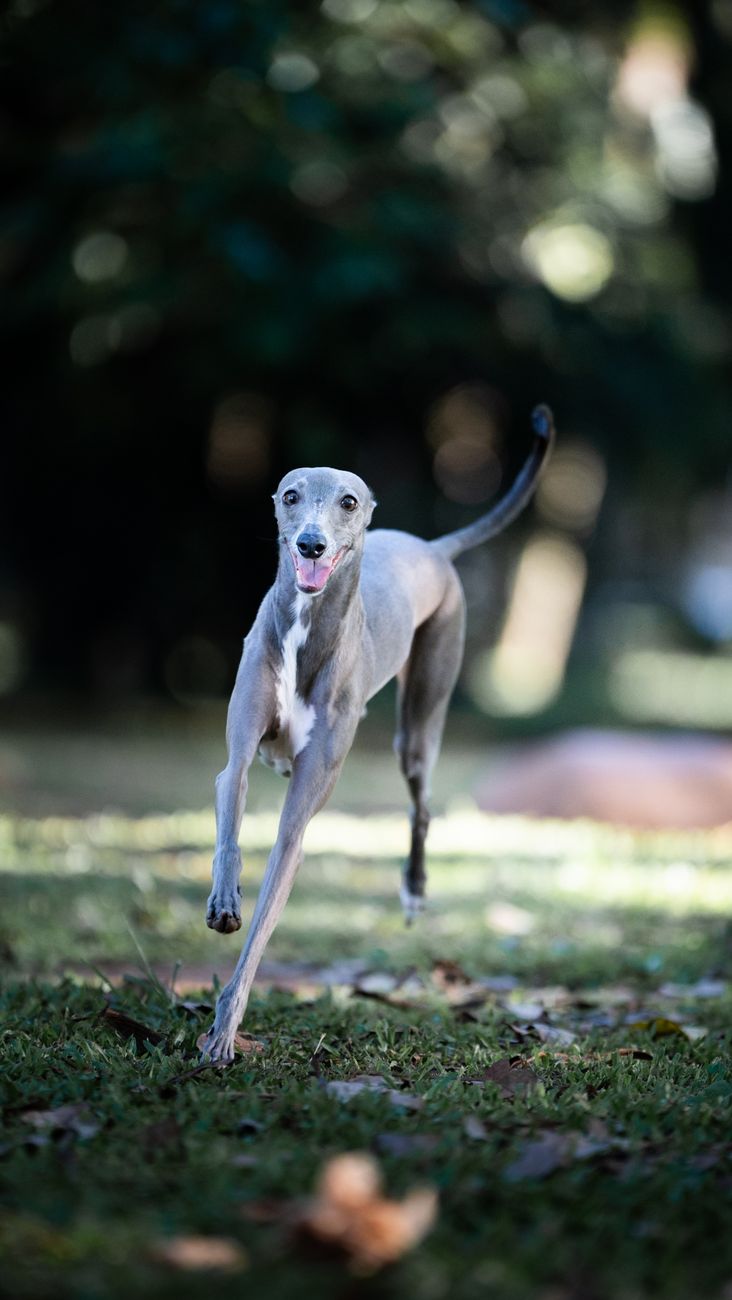
What to Know Before Buying a Greyhound Puppy
| Group | Hound (AKC, recognized 1885) |
|---|---|
| Origin | Ancient (Egypt/Middle East); refined in England |
| Height | Males 28–30 in, females 27–28 in |
| Weight | Females 60–65 lbs, males 65–70 lbs |
| Lifespan | 10–13 years |
| Coat | Short, smooth, thin; very low-maintenance |
| Color | Nearly every color and pattern (black, fawn, brindle, blue, white, and more) |
| Temperament | Gentle, calm, quiet, affectionate, independent, sensitive |
| Good for | Apartments, first-timers, and quiet homes; adopters of retired racers |
1. The 45-MPH Couch Potato
The Greyhound is the fastest dog breed on earth, capable of 45 mph, and also one of the most laid-back housemates you can own. This is the key surprise for new owners: despite the racing image, Greyhounds are calm, quiet, and mellow indoors, needing only short bursts of exercise (a couple of 30-minute walks plus a chance to sprint in a secure area) followed by long hours of contented sleep. They’re gentle and sensitive, adapt well to apartments, and often suit first-time owners.
2. The Prey Drive and Fencing Rule
The one hard rule: Greyhounds are sighthounds with an intense prey drive, and a Greyhound that spots a squirrel or cat will be gone at 40+ mph before you can react, with recall failing in the heat of a chase. That means leashed walks and a securely fenced yard (5+ feet) are non-negotiable, off-leash time in open areas is genuinely dangerous. Some do fine with cats indoors with careful introduction; others never can.
3. Gentle Temperament, Special Physiology
Greyhounds are affectionate, even-tempered, and quiet, rarely timid or aggressive, and they’re generally good with people and other dogs (they enjoy company but aren’t clingy). They’re comfort-seekers who’ll claim your sofa. Two physical quirks to plan for: their thin skin bruises and tears easily and they have very little body fat, so they get cold (coats and soft bedding help), and they need soft surfaces to prevent pressure sores.
4. Health and the Anesthesia Warning
Greyhounds are relatively healthy and low-shedding, but one medical fact is critical: because of their very low body fat and unique liver metabolism, they’re dangerously sensitive to certain anesthetics (barbiturates), a normal dose for another dog their size can be fatal, so your vet must use sighthound-safe protocols and Greyhound-specific bloodwork ranges. Also watch for bloat (GDV), bone cancer (osteosarcoma), dental disease, and painful foot “corns.”
5. Buying or Adopting
Most Greyhounds in pet homes are adopted retired racers, and they transition beautifully; groups like adoption organizations and the Greyhound Club of America can help. If you want a puppy from a breeder, verify against the AKC Marketplace. Either way, prioritize sound temperament and health.
Frequently asked questions
Do Greyhounds need a lot of exercise?
No, surprisingly little. Despite being the fastest dog breed, they’re “45-mph couch potatoes”, a couple of daily walks plus occasional sprints in a secure area suffice, and they sleep most of the day.
Are Greyhounds good apartment dogs?
Yes. They’re quiet, calm, clean, and low-energy indoors, which suits apartments well, provided they get daily walks and safe opportunities to run.
Why are Greyhounds sensitive to anesthesia?
Their very low body fat and unique liver metabolism mean certain anesthetics (especially barbiturates) aren’t processed normally, and a standard dose can be dangerous. Your vet must use sighthound-safe protocols.
Should I adopt a retired racing Greyhound?
For many people, yes. Retired racers are typically adult, gentle, and adapt quickly to home life, and adoption is affordable and rewarding. Just ensure you have secure fencing for the breed’s prey drive.