
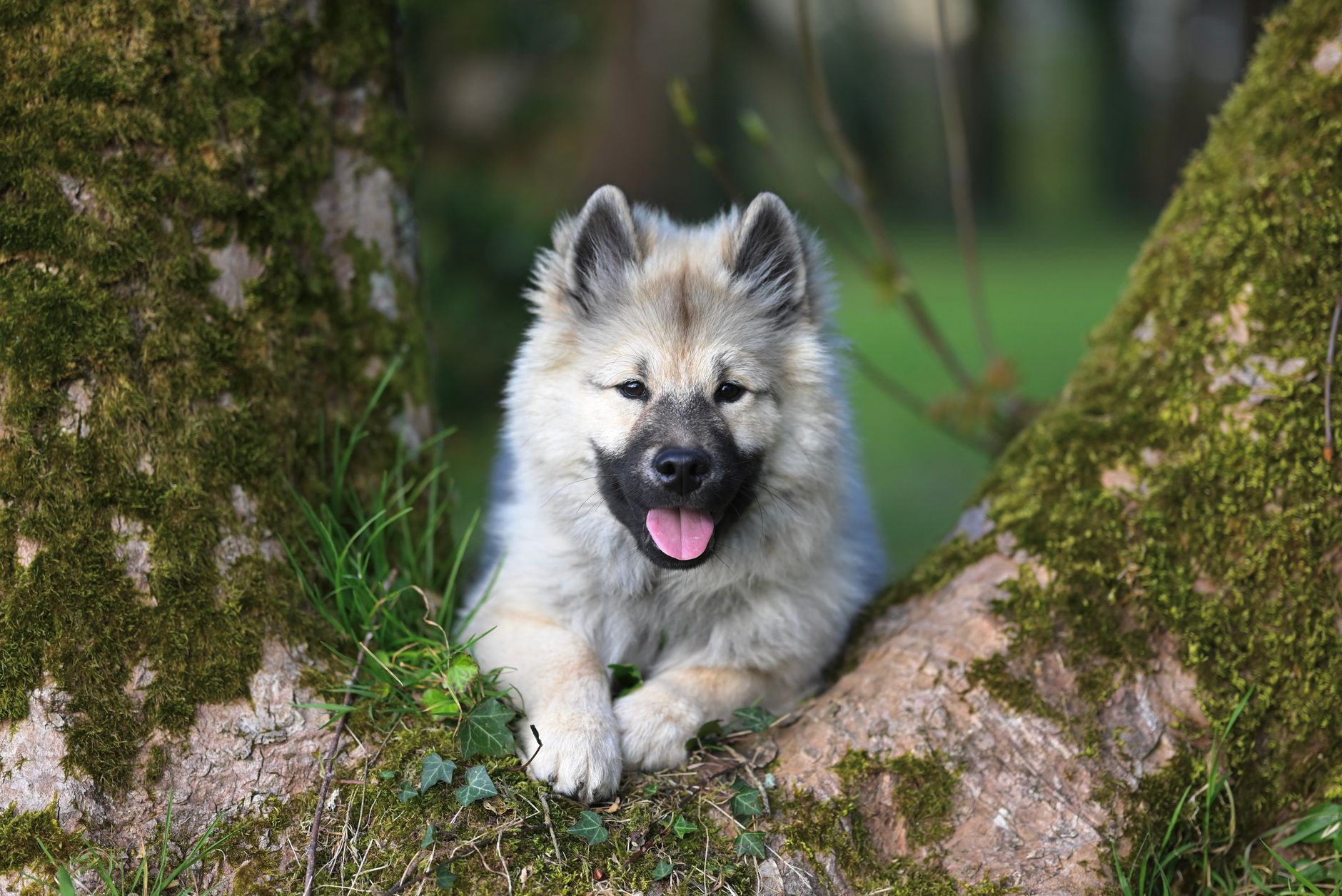
What to Know Before Buying a Keeshond Puppy
Quick answer: Before you buy a Keeshond puppy, know that this Dutch barge dog was bred to be a companion and watchdog, not a hunter or herder, so it wants nothing more than to be with you. Keeshonden live 12 to 15 years, train easily, and get along with nearly everyone. Expect serious seasonal shedding, a ready bark, and unhappiness when left alone. Ask breeders for the PHPT DNA test plus OFA hips, elbows, patellas, and current eye exams.
At a Glance
| Group | Non-Sporting (AKC, recognized 1930) |
| Origin | Netherlands |
| Height | Males 18 in; females 17 in |
| Weight | 35–45 lbs |
| Lifespan | 12–15 years |
| Coat | Abundant stand-off double coat with a lion-like ruff |
| Color | Gray, black, and cream mix with distinctive “spectacles” |
| Temperament | Outgoing, bright, affectionate, alert, people-oriented |
| Good for | Families who want a friendly, trainable companion and do not mind fur |
1. The Smiling Dutchman of the Barges
Keeshonden (the plural) rode Dutch river barges as watchdogs and companions and became a symbol of the 18th-century Patriot party. The breed’s trademark “spectacles,” dark lines running from the eyes toward the ears, give it an expression of permanent interest. With no hunting or herding history, it has little urge to roam or chase.
2. A Velcro Dog That Likes Everybody
This is one of the friendliest spitz breeds: good with children, other dogs, and visitors once it has announced them. It is sensitive and bonds closely, so long solitary days produce barking and anxiety. Keeshonden are quick, willing learners that do well in obedience, rally, and therapy work.
3. Moderate Exercise, Cool Weather Preferred
A brisk daily walk plus play, about 45 to 60 minutes in total, is enough. The heavy coat makes hot weather hard work, so exercise early or late in summer and provide air conditioning. Mental games matter as much as mileage for this clever breed.
4. Less Grooming Than It Looks, More Shedding Than You Expect
A thorough brushing to the skin once or twice a week prevents mats. Twice a year the undercoat “blows” for two to three weeks and daily brushing becomes necessary. Never shave a Keeshond: the double coat insulates against heat as well as cold and may not grow back correctly.
5. Health, the PHPT Test, and the Buyer Checklist
Primary hyperparathyroidism is the breed’s signature inherited disease, and a DNA test identifies carriers, so affected puppies are avoidable. Also ask for OFA hips, elbows, and patellas and current eye exams, and inquire about epilepsy, heart disease, and Cushing’s in the pedigree.
Frequently Asked Questions
How do you pronounce Keeshond?
“KAYZ-hawnd.” The plural is Keeshonden.
Do Keeshonden bark a lot?
They are natural watchdogs and will alert to anything new. They are not aggressive, and training keeps the barking to a brief announcement.
Can a Keeshond be left alone during the workday?
Not happily. The breed was developed purely for companionship and tends to develop separation problems with routine long absences.
Are Keeshonden good for first-time owners?
Yes. They are forgiving, eager to please, and moderate in exercise needs, provided you accept the coat care.
Read the official AKC breed standard
Sources
American Kennel Club – Keeshond
Orthopedic Foundation for Animals (OFA)
Canine Health Information Center (CHIC)
AKC Marketplace