
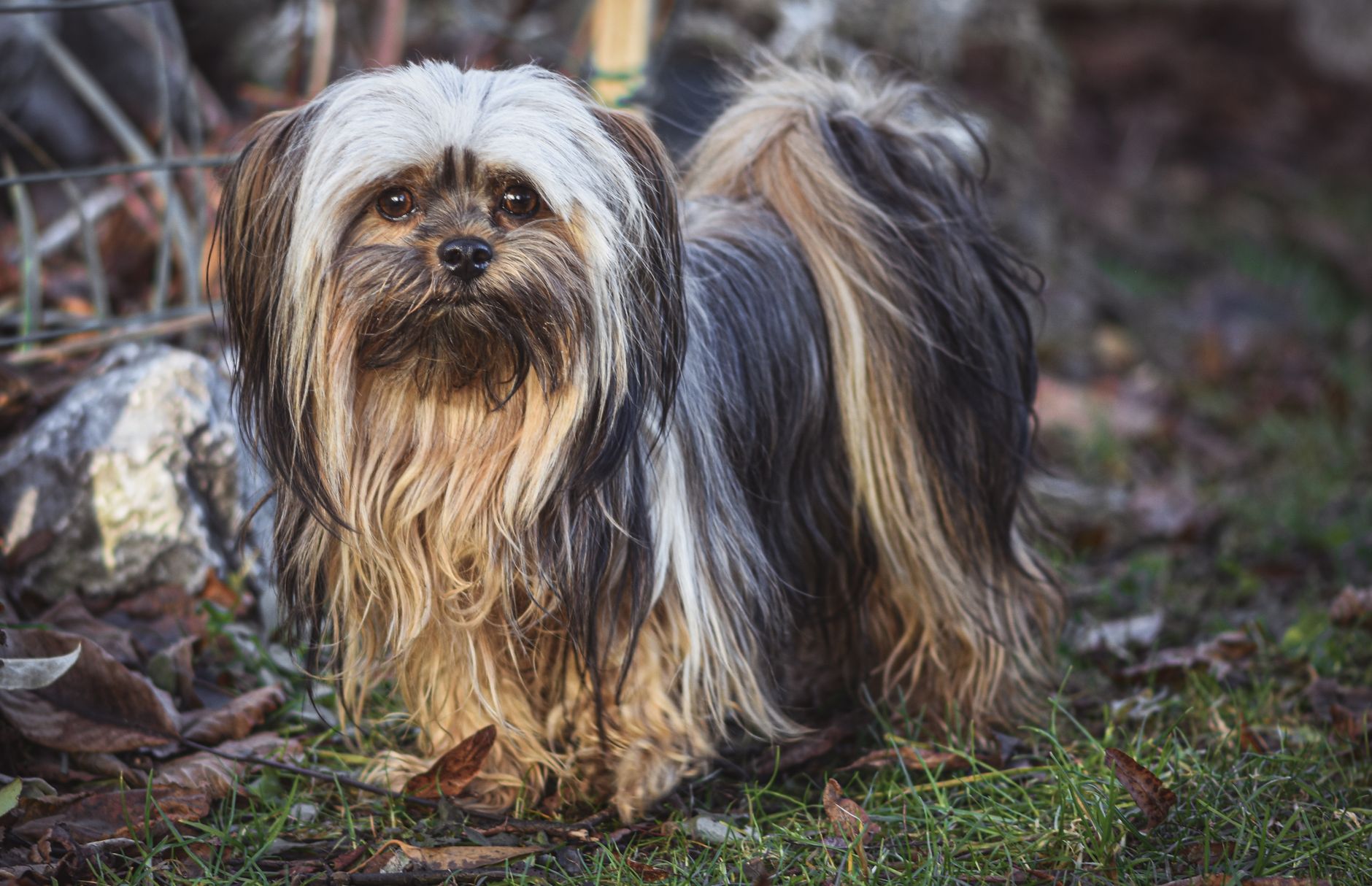
What to Know Before Buying a Lhasa Apso Puppy
Quick answer: Before you buy a Lhasa Apso puppy, know that this is not a lapdog in the usual sense. The Lhasa was an indoor sentinel in Tibetan monasteries, and it remains watchful, independent, and choosy about strangers. It is also sturdy and long-lived, commonly reaching 12 to 15 years and often more. The floor-length coat needs daily care unless clipped. Ask breeders about hereditary kidney disease and for eye and patella results.
At a Glance
| Group | Non-Sporting (AKC, recognized 1935) |
| Origin | Tibet |
| Height | 10–11 in; females slightly smaller |
| Weight | 12–18 lbs |
| Lifespan | 12–15 years |
| Coat | Heavy, straight, floor-length double coat |
| Color | All colors, including gold, cream, black, white, and parti-color |
| Temperament | Confident, independent, watchful, comical with family, aloof with strangers |
| Good for | Adults and families with older children who appreciate an independent small dog |
1. The Monastery’s Inner Guard
For centuries Lhasas kept watch inside Tibetan monasteries and palaces while mastiffs guarded outside, alerting to anything unusual with sharp hearing and a sharp bark. They were given as gifts by the Dalai Lama and never sold. That history explains a temperament quite different from other small companion breeds.
2. Independent and Discerning
With its family the Lhasa is affectionate, playful, and funny. With strangers it is reserved, and it does not appreciate being grabbed or fussed over. Early socialization prevents suspicion from hardening into snappishness. Training works when you make it worth the dog’s while; this breed does not obey for the sake of obeying.
3. Low Exercise Needs
Short daily walks and indoor play are enough, making the Lhasa a good apartment dog. It is hardier than many small breeds and tolerates cold well, though heat is harder under a full coat.
4. Full Coat or Puppy Cut
A long coat needs brushing to the skin daily or every other day and a bath every week or two. Most pet owners choose a short puppy cut, refreshed every six to eight weeks. Either way, keep hair clear of the eyes and clean the face daily.
5. Health and the Buyer Checklist
Hereditary renal dysplasia is the breed’s most serious inherited problem, so ask directly about kidney disease in the line. Eye conditions (dry eye, cherry eye, progressive retinal atrophy), patellar luxation, and allergies also occur.
Frequently Asked Questions
Are Lhasa Apsos good with kids?
They suit older, respectful children best. Many do not tolerate the grabbing and noise of toddlers.
What is the difference between a Lhasa Apso and a Shih Tzu?
The Lhasa is slightly larger, with a longer muzzle and a more independent, watchful nature. The Shih Tzu is more outgoing and people-pleasing.
Do Lhasa Apsos shed?
Very little, but the coat grows continuously and mats without regular brushing.
Do Lhasa Apsos bark a lot?
They are natural alarm dogs and will bark at anything unusual. They are otherwise fairly quiet.
Read the official AKC breed standard
Sources
American Kennel Club – Lhasa Apso
Orthopedic Foundation for Animals (OFA)
Canine Health Information Center (CHIC)
AKC Marketplace